There are numerous ways to reduce stress in the long term, but sometimes you need a way to de-stress now. Free, easy tools you can use anywhere will help you de-stress in the moment and manage your overall stress levels. You’ll feel calmer during stressful situations and be able to act with more clarity. Read on to learn the top three ways to get fast-acting stress relief.
Learn to Breathe
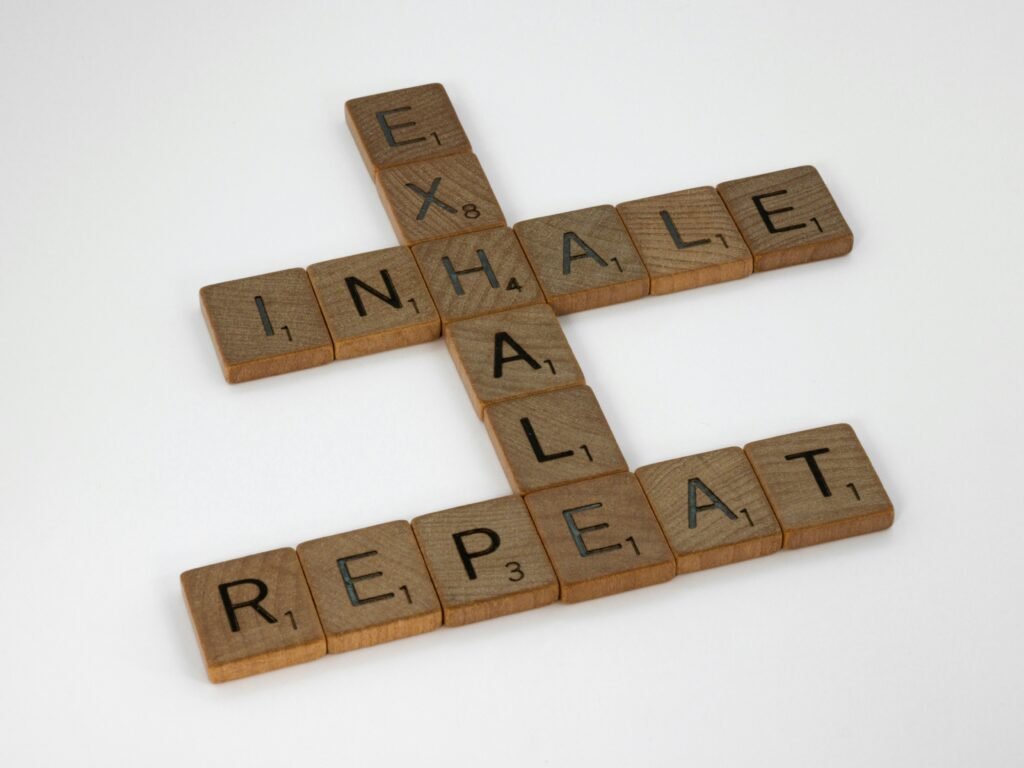
One of the easiest and most impactful ways to decrease and manage stress is to learn how to breathe. You breathe all day long (of course!), but there are specific ways to breathe to support your mental health.
When you’re stressed, you’ve activated your sympathetic nervous system, or your fight or flight response. To counter that, you want to tell your body to ease off on the fight or flight and start to shift into the parasympathetic nervous system, or your resting system.
You can communicate this with your body through your breath. There are thousands of breathing protocols out there, but here’s a simple yet very effective one:
- Find a comfortable position where you can relax. Close your eyes.
- Inhale and exhale through your nose. Every few breaths, you can sigh out through your mouth if that feels good.
- Breathe into your diaphragm. Diaphragmatic breathing feels like your belly expanding outwards rather than your chest going upwards.
- Exhale twice as long as you inhale. For example, if you inhale for 3 seconds, you should exhale for 6 seconds.
This breathing style slows down your heart rate, tells your body that you are safe and helps your nervous system switch out of fight or flight mode. Breathing this way is a great strategy to feel your stress levels immediately drop, and it’s an excellent long-term practice to help decrease your overall stress levels.
Also, keep in mind that you can do this breathing exercise with your eyes open in a room full of people, and no one will know that you’re actively reducing your stress!
Move Your Body
Movement is good for so many reasons, including managing stress. Regular exercise can also reduce stress over the long term.
When you’re stressed, moving is an easy way to shift some stuck energy. How you choose to move when you’re stressed will depend on what type of stress you’re feeling, where you are and how much time you have to move.
For example, in some stressful situations, you may want to do something powerful, like lift weights, whereas in others, you might feel you need something calmer, like a walk. Or, you might be in the middle of a stressful moment with no time to do an actual workout; in this case, your movement practice could be as simple as jumping up and down while you shake out your limbs (which is surprisingly effective!).
Movement releases chemicals in your brain called endorphins. These are feel-good chemicals that help you relax and boost your mood. You may also hold a lot of tension in your body when stressed. Moving and activating your muscles can help release some of this built-up tension, leading to an immediate feeling of stress relief.
No matter how you move, be fully present as you exercise to get the stress-reducing benefits.
Be Mindful
You’re probably all-too-familiar with the feeling of a million things happening in your brain when stressed. Usually, you aren’t connected to the present moment, and you’re living in a world of what-ifs, tasks or deadlines.
Consciously bringing your focus and attention back to the present is a powerful way to de-stress. Mindfulness practices often sound a bit silly when you first hear about them, but they are highly effective, simple practices.
Here’s what you’ll need to do to de-stress through mindfulness:
- Stop what you’re doing and be still. You can practice mindfulness with your eyes open or closed, but if you’re feeling quite overwhelmed, you might want to start with your eyes closed.
- Breathe. Don’t try to control your breath, but pay attention to how you are breathing.
- Scan your body. Move your focus and attention up and down your body, noticing any areas that feel tense.
- Notice your surroundings. If your eyes are closed, shift your attention to sensations on your body or your skin, smells and sounds. If your eyes are open, scan your surroundings slowly, noticing as much detail as possible.
- Shift your attention back to your breath. Finish your practice by taking three deep breaths through your nose and sighing out through your mouth.
After a few minutes, you should feel your stress levels drop. After a mindfulness practice, you may notice that you approach a stressful situation more clearly and patiently.
Takeaway
The three most accessible ways to reduce your stress now are to breathe, move and be mindful. You can do all of these strategies anywhere, anytime. Practicing them regularly when you’re feeling stressed will also decrease your overall stress levels in the long term, helping you feel calmer and more relaxed as you navigate your day-to-day life.