Herbs are versatile flavour bombs that can take your cooking to the next level. They are generally very resilient and need minimal care, making them an excellent choice for a kitchen herb garden (even if growing your own food is new to you!). Fresh herbs available on-demand in your kitchen are the ultimate cooking convenience.
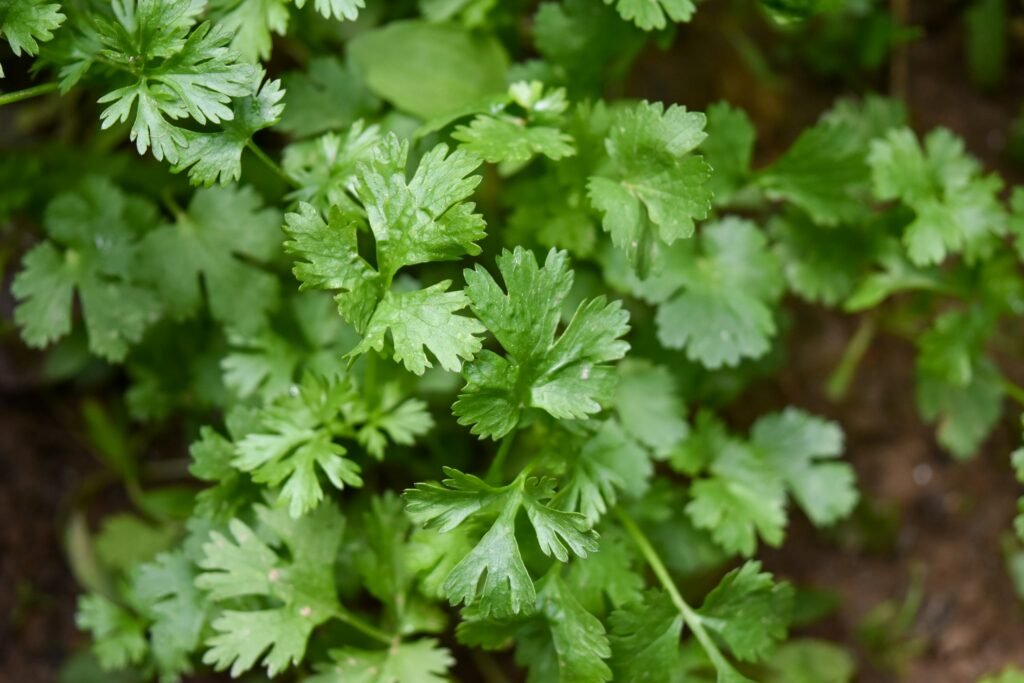
Parsley
Parsley is a mild but flavourful herb that is often the fresh garnish your dish needs. It comes in two forms: flat-leaf and curly-leaf. You can grow either in your kitchen, but flat-leaf parsley is usually more flavourful and able to hold its flavour better if used in cooking.
Here are some parsley pairing ideas to get you started:
- Eggs
- Fish
- Legumes
- Tomatoes
- Vegetables & salads
How to Make Parsley Thrive in Your Kitchen
Parsley can thrive even without a ton of sunlight. While around 6 hours of sunlight is ideal, parsley will still grow even with as low as 3 hours per day. That means it’s a good choice if you don’t have a south-facing windowsill in your kitchen.
Parsley also likes humidity, making it a good fit for your kitchen, which is typically a humid room if you cook regularly (if your kitchen is quite dry, spritz the leaves every few days with water). Parsley likes to have moist but not water-logged soil, so you’re looking for the balance of watering not too much but not too little. Aim to keep the soil moist, and always drain any water that collects in the tray underneath your pot.
Chives
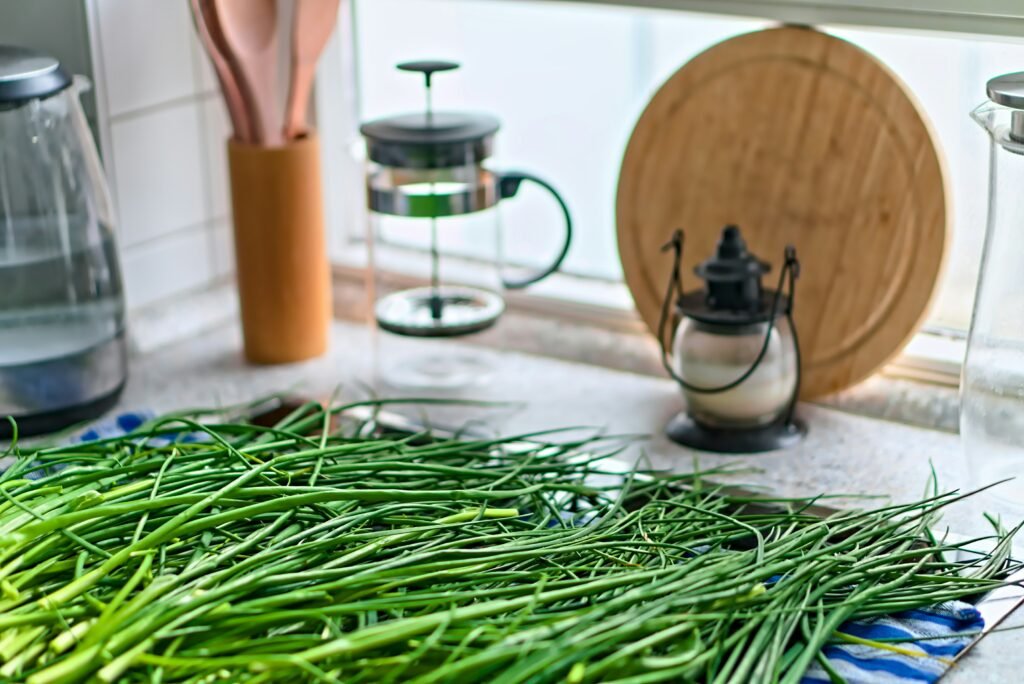
Chives provide an oniony flavour without being overpowering. We’ve included them as a herb, but they are technically part of the onion family. Their mild and subtle flavour makes them a fantastic garnish or addition to dips, sauces, soups, stews and salads. Plus, they couldn’t be easier to harvest – simply snip close to the base of the plant and then continue snipping into pieces over top of your meal.
Here are some chive pairing ideas to get you started:
- Avocados
- Eggs
- Fish
- Root vegetables
- Salads
How to Make Chives Thrive in Your Kitchen
Like parsley, chives can tolerate lower light than other herbs, so they’re another excellent option for windowsills that aren’t south-facing. Chives can handle a bit more dryness in their soil, but they still like to be watered regularly. As a good rule of thumb, water your chives as soon as you notice the top of the soil looking or feeling slightly dry. Overall, chives are one of the easiest indoor herbs to care for.
Chives are unique because they are perennials, meaning that they will continue to produce, year after year. At some point, you’ll likely want to divide your chives, which is easily done by digging up a clump of bulbs and replanting them in a new container (or outside!).
Mint
Mint is one of the most versatile herbs out there. Its unique flavour pairs with sweet and savoury and makes the perfect base for beverages (everything from tea to cocktails). Mint has a subtly sweet taste and a cooling effect because it contains menthol. You can grow many types of mint, with peppermint and spearmint being the most well-known.
Here are some mint pairing ideas to get you started:
- Beans
- Carrots
- Cucumber
- Peas
- Eggplant
- Lamb
How to Make Mint Thrive in Your Kitchen
Mint is adaptable and will do well in sunnier locations and spots with a bit less light (just ensure it gets at least 3 hours of sunlight a day!). It does well with indirect sunlight, so it’s perfect for the edge of your windowsill, letting basil and oregano take center stage.
Mint likes moist, but not water-logged soil, so frequent watering is necessary. Like parsley, aim to keep the soil moist. Mint also loves humidity, which is usually a good fit in the kitchen (remember, you can mist the leaves every few days if you have a very dry kitchen).
Basil
Basil is a delicate herb with a sweet and slightly spicy or peppery aroma and flavour. Depending on the specific basil you grow, you may get other flavours, such as lemon, cloves, licorice and cinnamon. Because the leaves are delicate, add basil once your dish is off the heat. If fresh basil is exposed to too much heat, it will wilt, darken in colour and lose flavour.
Here are some basil pairing ideas to get you started:
- Tomatoes
- Olive oil
- Red bell peppers
- Corn
- Peas
- White beans
How to Make Basil Thrive in Your Kitchen
Basil loves the sun, so it should be your priority for your south-facing windowsills. It is susceptible to over-watering, so take care not to over-saturate the soil. Water when the top of the soil feels dry to the touch and always drain excess water from the tray under your plants.
Oregano
Oregano is a classic Mediterranean herb with a bold, earthy flavour, often described as a blend of slightly sweet and bitter. It’s a more hardy herb, meaning that fresh oregano is strong enough to hold up to cooking but soft enough that it doesn’t feel unpleasant to chew on fresh.
Here are some oregano pairing ideas to get you started:
- Beans
- Bell peppers
- Tomatoes
- Olive oil
- Corn
- Chicken
- Fish
- Lamb
How to Make Oregano Thrive in Your Kitchen
Oregano can be next to basil on your south-facing windowsill because it’s another sun-loving herb. It is a naturally drought-tolerant herb, so its watering needs are relatively low. Allow the soil to dry completely between waterings.
Other Creative Ways to Use Fresh Herbs
The possibilities really are endless for how to use fresh herbs in the kitchen. Here are two more creative ideas that you can test out with your kitchen herb garden.
Herb-Infused Extra Virgin Olive Oil
Herb-infused olive oil is a fun way to change up the flavour of your oil. It’s perfect for drizzling on salads, grilled meat and fish, soups and stews.
The quickest way to make an infused oil with fresh herbs is to use a stovetop method:
- Wash and dry your fresh herbs.
- Bruise or crush the herbs slightly to help release more flavours.
- Add to a saucepan and cover with extra virgin olive oil.
- Gently heat the olive oil over low heat for 5 to 7 minutes. Watch closely and remove from the heat as soon as you see tiny bubbles starting to form. You don’t want to cook the olive oil – the heat is just to help release the flavours from the herbs.
- Remove from the heat, cover and let sit for at least 2 hours. Let it sit overnight if you want a more robust flavour.
- Strain out the fresh herbs and transfer the oil to glass jars or bottles.
As a general guide, use approximately ¼ cup of fresh herbs per 1 cup of olive oil; however, there’s no going wrong with this, so do whatever feels right! You can also add other flavours such as garlic cloves, peppercorns, chile, and different combinations of fresh and dried herbs. Use your infused oil within two months.
The stovetop method is the quickest way to infuse oils; however, you can also experiment with solar infusions (using the sun) over longer periods. Just make sure to protect the olive oil from direct light as direct sunlight can lead to oxidation.
Herb-Infused Vinegar
Herb-infused vinegar takes a bit more time because there’s no heat involved, but the effort is minimal! Again you’ll start by washing, drying and lightly bruising or crushing your fresh herbs. Add them to a jar, cover with a vinegar of your choosing (white, red, apple cider, etc.) and close the jar with the lid.
Place the jar in a dark spot (the back of the pantry usually does the trick!) for about two weeks to infuse. If you want a stronger flavour, infuse for longer. Once you are happy with the taste of your infused vinegar, strain out the herbs and bottle or jar.
Takeaway
Fresh herbs in your kitchen can be a game-changer for your culinary endeavours. It’s all about convenience when it comes to having herbs in your kitchen, so you can harvest what you need when you need it. Get creative with how you add fresh herbs to your cooking and other ways to incorporate them into your diet.